Cádiz metal conflict: no agreement and strike starting June 23
Conflict in the metal sector in Cádiz: No agreement and mobilizations in sight
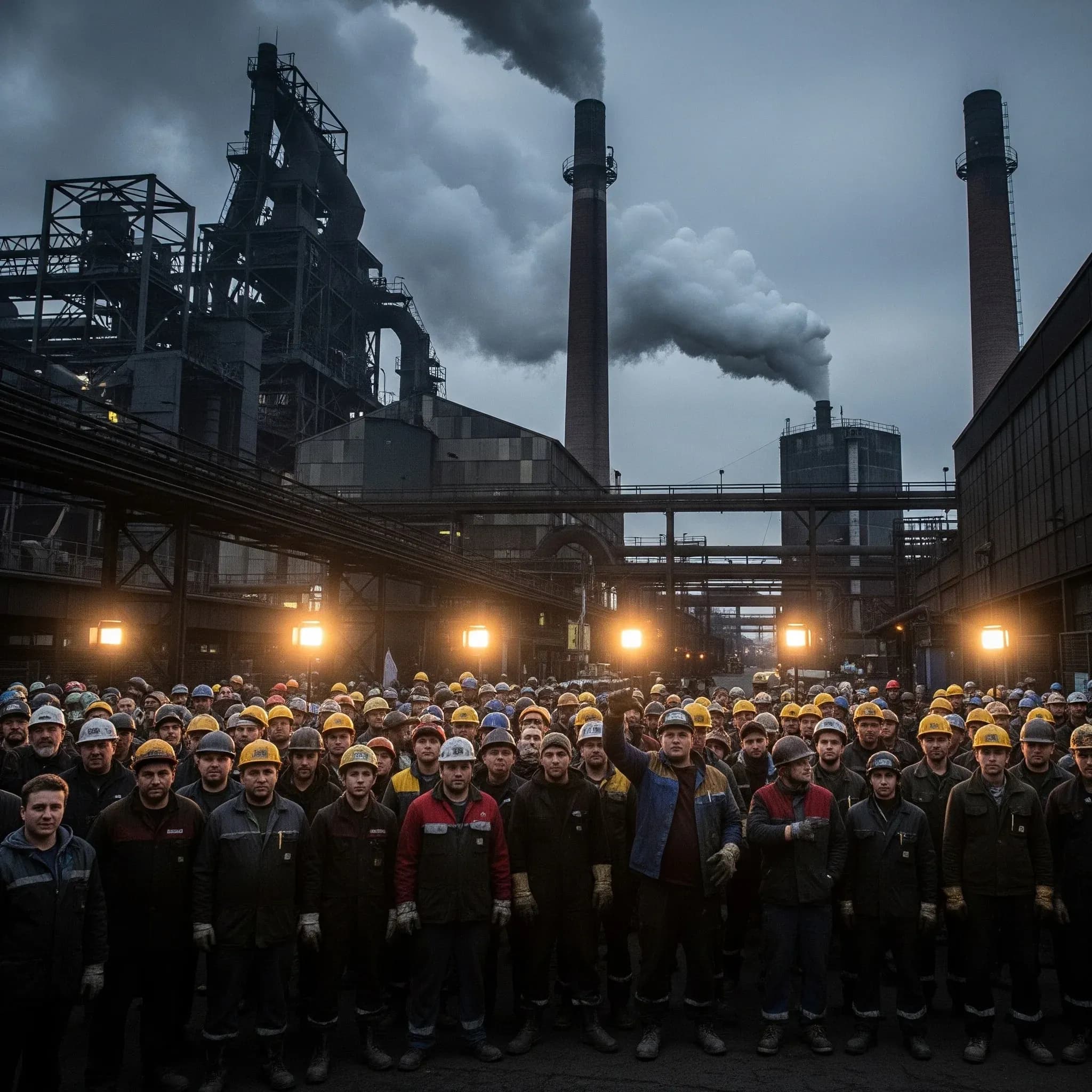
The metal sector in the province of Cádiz, which affects more than 25,000 workers, is at a standstill following the failure of negotiations to renew the collective bargaining agreement. Despite the initial willingness of both parties, the proposals presented by trade unions and employers have been mutually rejected, leading to a scenario of tension and mobilizations.
Conflicting positions and protest schedule
José Muñoz, secretary general of the Federación de Empresas del Metal de la Provincia de Cádiz (Femca), assured that they are not seeking to delay the process, while Antonio Montoro, head of FICA UGT Cádiz, was moderately optimistic until now. However, the lack of consensus has led the CCOO and UGT unions to propose a protest schedule, which will be put to a vote this Friday.
The action plan includes full work stoppages on June 17 and 18, followed by an indefinite strike starting June 23. Montoro pointed out that there is still room for employers to "become aware of the workers' effort", but warned that if this is not the case, they will be forced to take "pressure measures".
The employers' position
For its part, Femca expressed its disagreement with the mobilizations, arguing that "the current negotiation situation does not justify this measure". The employers insist that significant progress has been made on the main points of conflict and call for responsibility to avoid "unnecessary economic and social damage".
Among the highlighted advances, Femca points out that it has fully accepted the unions' wage proposal, known as "Option B", which includes increases of 3% for 2024 (higher than the 2.8% CPI) and 2.8% for 2025, as well as the payment of back pay. In addition, an update of pay tables in line with the CPI for subsequent years has been agreed, which, according to employers, guarantees a purchasing power gain of over 1%.
Improvements to the agreement
Femca has also agreed to improve eleven articles of the agreement, including measures such as:
- More advantageous payments for per diems, transport, and extra pay.
- Advance payment of the Christmas bonus.
- Removal of limits on the transport allowance.
- Full payment of the study allowance at the start of the academic year.
- More complete work equipment.
Points of disagreement
The main stumbling blocks focus on two key aspects:
- Fixed-discontinuous contracts: Femca proposes a regulated framework with objective call-up criteria and a maximum inactivity period of 12 months.
- Hardship bonus: Employers argue that it is a consolidated personal bonus, while unions seek its extension to the entire workforce.
The outcome of this conflict will depend on upcoming negotiations and the response of both sides to the announced mobilizations. The Cádiz metal sector is at a crucial moment that could shape the working future of thousands of workers.