Ayuntamiento de Cádiz: expert in paying for apps that don't work and ignoring the ones that do
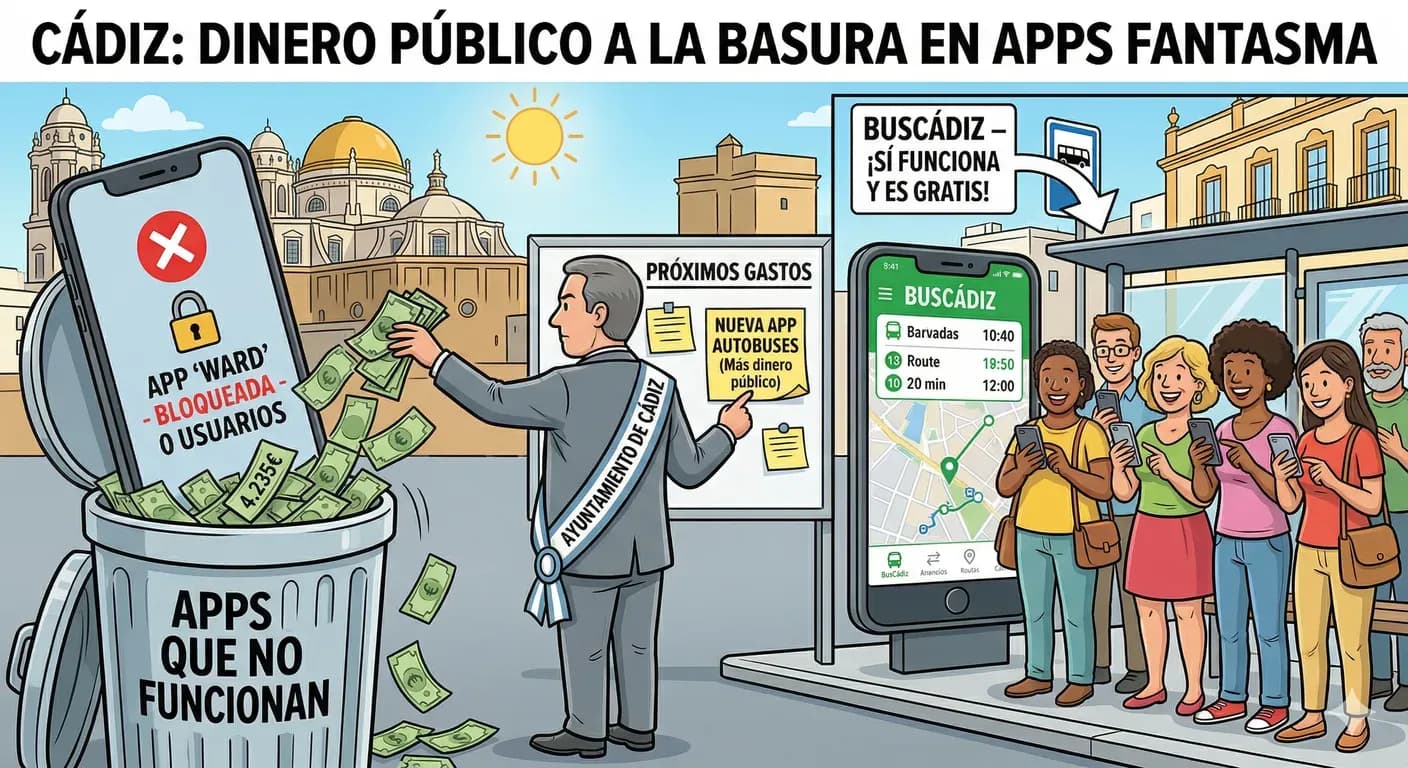
The Consistorio gaditano threw away 4,235 euros of public money on a mobile application that wasn't used for a single day of the 12 months for which it was contracted. Not a single victim. Not a single activated license. Zero. Meanwhile, in Cádiz there is a locally developed app, BusCádiz, that works, that the people of Cádiz use, and that the Ayuntamiento completely ignores… while planning to spend more money creating another bus app from scratch.
The Ward fiasco, step by step
In February 2025, the Fundación Municipal de la Mujer del Ayuntamiento de Cádiz awarded the contract to the company Innovasur for 4,235 euros (VAT included) to acquire 30 licenses for the application Ward, an evidence-recording tool using blockchain technology for victims of gender-based violence. On March 31, Mayor Bruno García and Equality Councilor Virginia Martín presented it excitedly to the media, talking about an “important step” and “pioneering technology”. Just four days later, on April 4, the Consejo de Transparencia y Protección de Datos de Andalucía was already calling the Ayuntamiento to warn that something smelled fishy.
On June 4, 2025, the final resolution arrived: the Consejo de Transparencia recommended the total suspension of the project due to an “unacceptably high risk” to the rights and freedoms of those affected. In September, the Ayuntamiento's own Delegado de Protección de Datos confirmed in writing that the licenses could not be used. In December, the contract termination procedure was initiated. And on February 2, 2026, almost a year after buying it, the Ayuntamiento terminated the contract with Innovasur. Remarkably, the company didn't even bother to submit objections.
Result: 30 licenses purchased, 0 used, 12 months wasted, and 4,235 euros down the drain, in a city where that year there were 79 active cases of medium-low risk gender-based violence that could have benefited from the tool.
In Cádiz, there are already people who know how to make apps
What is truly surreal is the contrast with what happens just a few meters from the Ayuntamiento.
BusCádiz
is a locally developed application that already does exactly what the Consistorio has been promising to do for years: it displays in real time how long the next bus will take, locates the nearest stops via GPS, integrates Google Maps with all routes and stops, and allows route planning combining bus and walking. It works. The people of Cádiz use it. And it hasn't cost the taxpayer a single euro.
And on top of that, they plan to spend more on another bus app
Here comes the punchline. In the municipal plenary session of February 2026, the Ayuntamiento approved the new specifications for the urban transport service, which explicitly includes the development of a new app to provide real-time bus service information, as well as a digital Bonobús app. In other words: the very same Consistorio that just threw money away on an app that didn't pass the first legal filter, and has an already operational and free local solution right under its nose, is going to hire—once again with public money—someone from the outside to do what a local Cádiz developer has already done.
The repeating pattern
The Ward case is not an isolated mistake. It is a snapshot of how tech procurement works at the Ayuntamiento de Cádiz: opaque tenders to outside companies, press conference presentations featuring the mayor, and projects that collapse at the first legal or technical obstacle. Meanwhile, local talent—those who know the city, who have spent years maintaining it, and who don't need anyone to explain how the Cádiz bus works—is still waiting for someone on the other end at the Ayuntamiento to pick up the phone.